
ARAB WORLD PREMIERE
Overview
One of the world's most celebrated dance companies returns to Abu Dhabi with an extraordinary programme that celebrates the richness and evolution of ballet, from the elegance of the classical tradition to the poetic imagination of contemporary choreography.
Bringing together four landmark works by Frederick Ashton, Brady Farrar, Jiří Kylián and Natalia Makarova, the evening highlights the remarkable versatility, artistry and technical brilliance of American Ballet Theatre's dancers.
Whether classical splendour or contemporary invention, this is ballet in its fullest expression – a testament to the art form's enduring power and capacity to inspire.
PROGRAMME
BIRTHDAY OFFERING
Choreography by Frederick Ashton(1904–1988)
Music by Alexander Glazunov
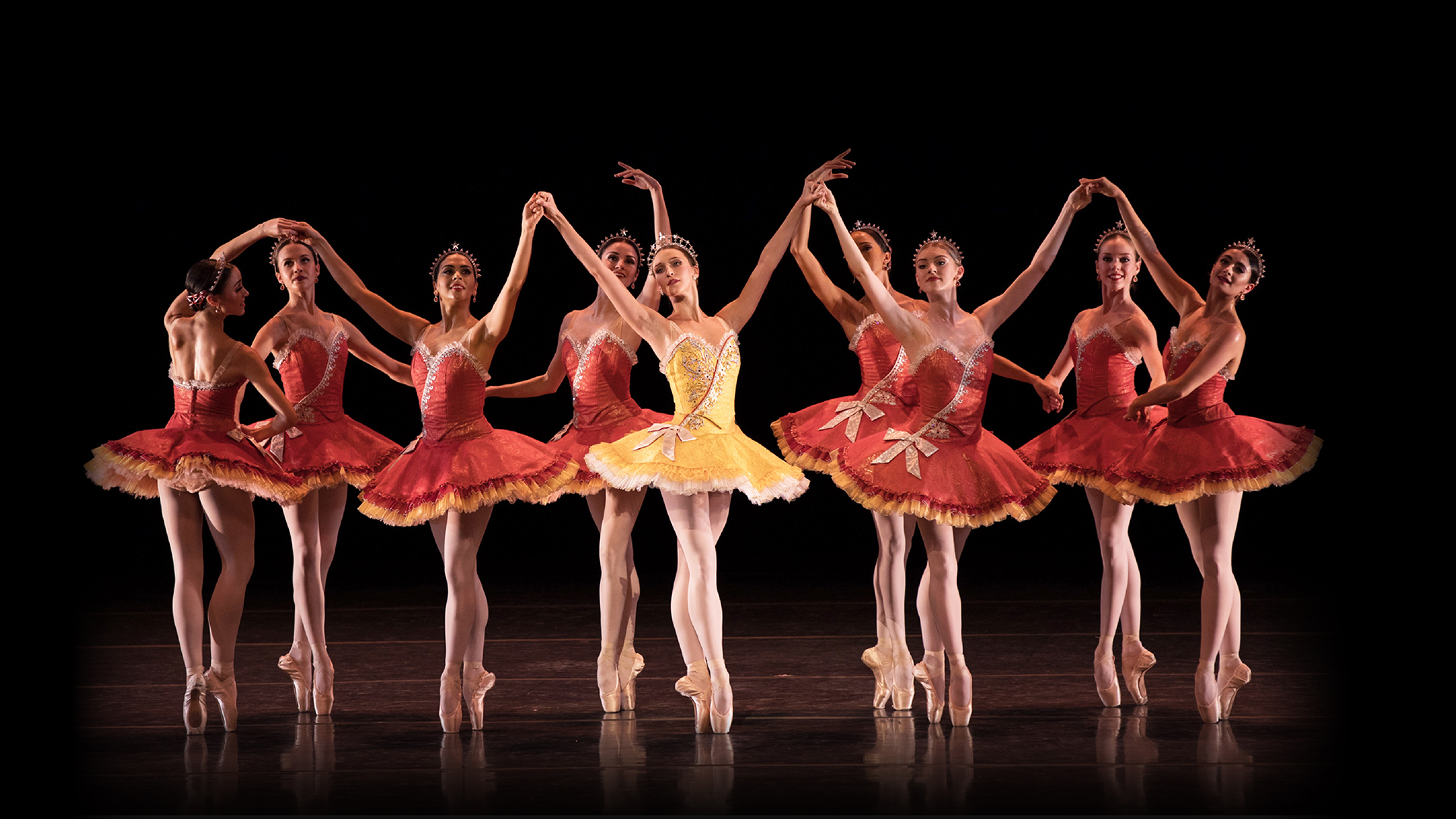
Created in 1956 to mark The Royal Ballet’s25th anniversary, Birthday Offering celebrated the talents of thecompany’s leading ballerinas, including Elaine Fifield, Rowena Jackson,Svetlana Beriosova, Nadia Nerina, Violetta Elvin, Beryl Grey, and MargotFonteyn. Each dancer was featured in a solo specifically crafted to showcaseher individual gifts. Set to Alexander Glazunov’s radiant orchestral score, today’sdancers continue to honour this historic work by bringing their own artistry tothese storied roles.
TRIO ÉLÉGIAQUE
Choreography by Brady Farrar (B. 2005)
Music by Sergei Rachmaninoff
ABT corps de ballet member Brady Farrarmade his choreographic debut with the Company this fall, adding a compellingnew voice to the repertoire with Trio Élégiaque. Set to the firstmovement of Rachmaninoff's haunting tribute to Tchaikovsky, the work exploresthemes of memory, longing and loss. Farrar's choreography brings three couplestogether in a shifting landscape of relationships, capturing the complexitiesof connection, separation and the memories that linger.
NUAGES
Choreography by Jiří Kylián (B. 1947)
Music by Claude Debussy
One of Jiří Kylián's earliest works, andone of his few danced in pointe shoes, Nuages is a seamless,daring pas de deux, remarkable for its humanity and intricate partnering. Thechallenges of the choreography are matched only by the demands of Debussy'satmospheric score, inviting audiences into the intimate world of this partnership.
PAQUITA
Choreography by NataliaMakarova (B. 1940), after Marius Petipa
Music by Ludwig Minkus (1818–1910)
The grand divertissement from Paquita isa showcase of classical ballet elegance and virtuosity. In Natalia Makarova'scelebrated staging, a sequence of dazzling variations and ensemble dancesunfolds with style, musicality and technical brilliance. At its centre, thecommanding ballerina leads with grace and authority.
ARTISTS
American Ballet Theatre
American Ballet Theatre (ABT) is recognised as one of the great dance companies in the world. Few ballet companies equal ABT for its combination of size, scope and outreach. Founded in 1940, ABT is the only major cultural institution that annually tours the United States, performing for more than 300,000 people. The company has also made more than 30 international tours to 45 countries as perhaps the most representative American ballet company and has been sponsored by the United States Department of State on many of these engagements.
When ABT was launched, the aim was to develop a repertoire of the best ballets from the past and to encourage the creation of new works by gifted young choreographers, wherever they might be found. Under the direction of Lucia Chase and Oliver Smith from 1945 to 1980, the company more than fulfilled that mission. Perhaps unmatched in the history of ballet, ABT’s repertoire includes beloved full-length classics from the 19th century, such as Swan Lake, The Sleeping Beauty and Giselle; many of the finest works from the 20th century, including Apollo, Les Sylphides, Jardin aux Lilas, Fancy Free, Rodeo, Airs, Push Comes to Shove and In the Upper Room; and acclaimed contemporary masterpieces, including Shostakovich Trilogy and Serenade after Plato’s Symposium. Throughout the curation of this repertoire, ABT has commissioned works by celebrated choreographers of the 20th and 21st centuries: George Balanchine, Antony Tudor, Jerome Robbins, Agnes de Mille, Twyla Tharp, Mark Morris, Alexei Ratmansky and Christopher Wheeldon, among others.
In 1980, Mikhail Baryshnikov became Artistic Director of American Ballet Theatre. Under his leadership, numerous classical ballets were staged, restaged and refurbished and the company experienced a strengthening and refining of the classical tradition. In 1990, Jane Hermann and Oliver Smith succeeded Baryshnikov and immediately established an agenda that was dedicated to maintaining the great traditions of the past while pursuing a vital and innovative future.
In October 1992, the former American Ballet Theatre principal dancer Kevin McKenzie was appointed Artistic Director. McKenzie, steadfast in his vision of ABT as American, was committed to maintaining the company’s vast repertoire and to bringing the art of dance theatre to the great stages of the world.
Former American Ballet Theatre principal dancer Susan Jaffe was named Artistic Director in December 2022. Jaffe is dedicated to preserving the beauty and depth of classical ballet while moving the company artistically into the future, expanding ABT’s audience and exploring diverse choreographers and styles.
In keeping with ABT’s long-standing commitment to bringing the finest in dance to the widest international audience, the company has recently enjoyed triumphant successes with engagements in Abu Dhabi, Brisbane, Paris, Muscat, Shanghai and Seoul. On 27 April 2006, the United States Congress honoured ABT by recognising its service as ‘America’s National Ballet Company’.

.png)
.png)


.png)














.png)
.png)


.png)